1 hr 15 min
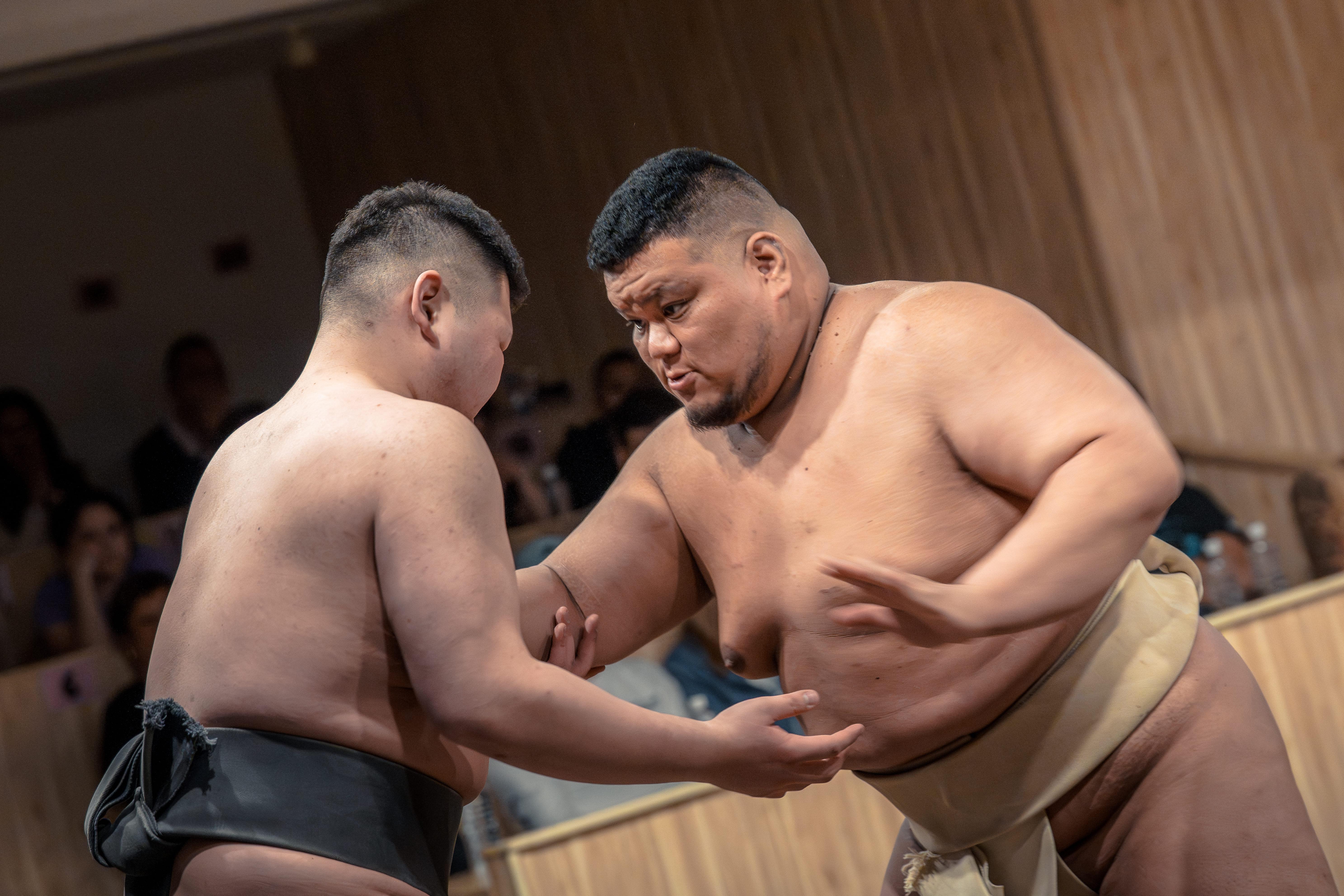
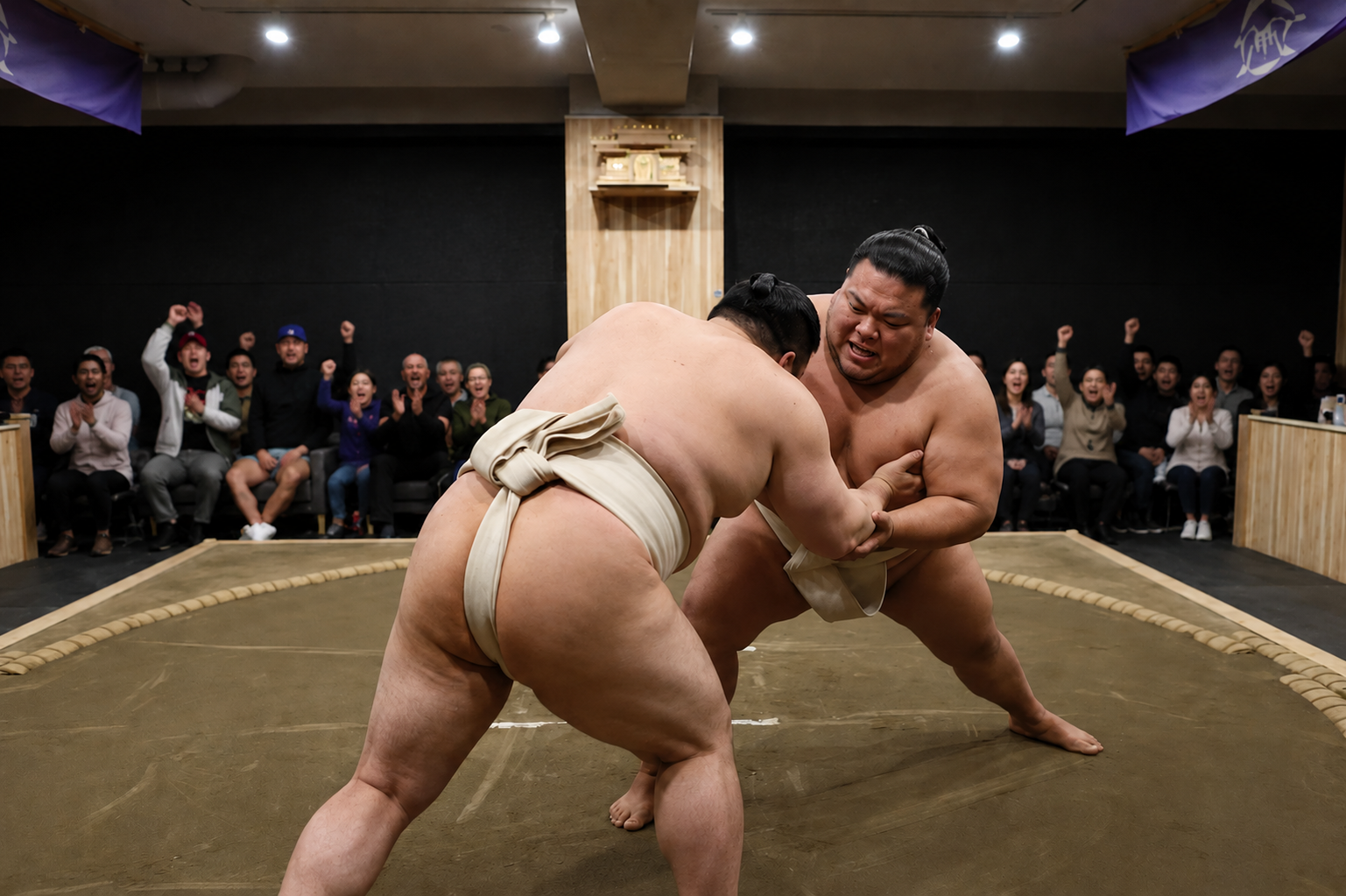
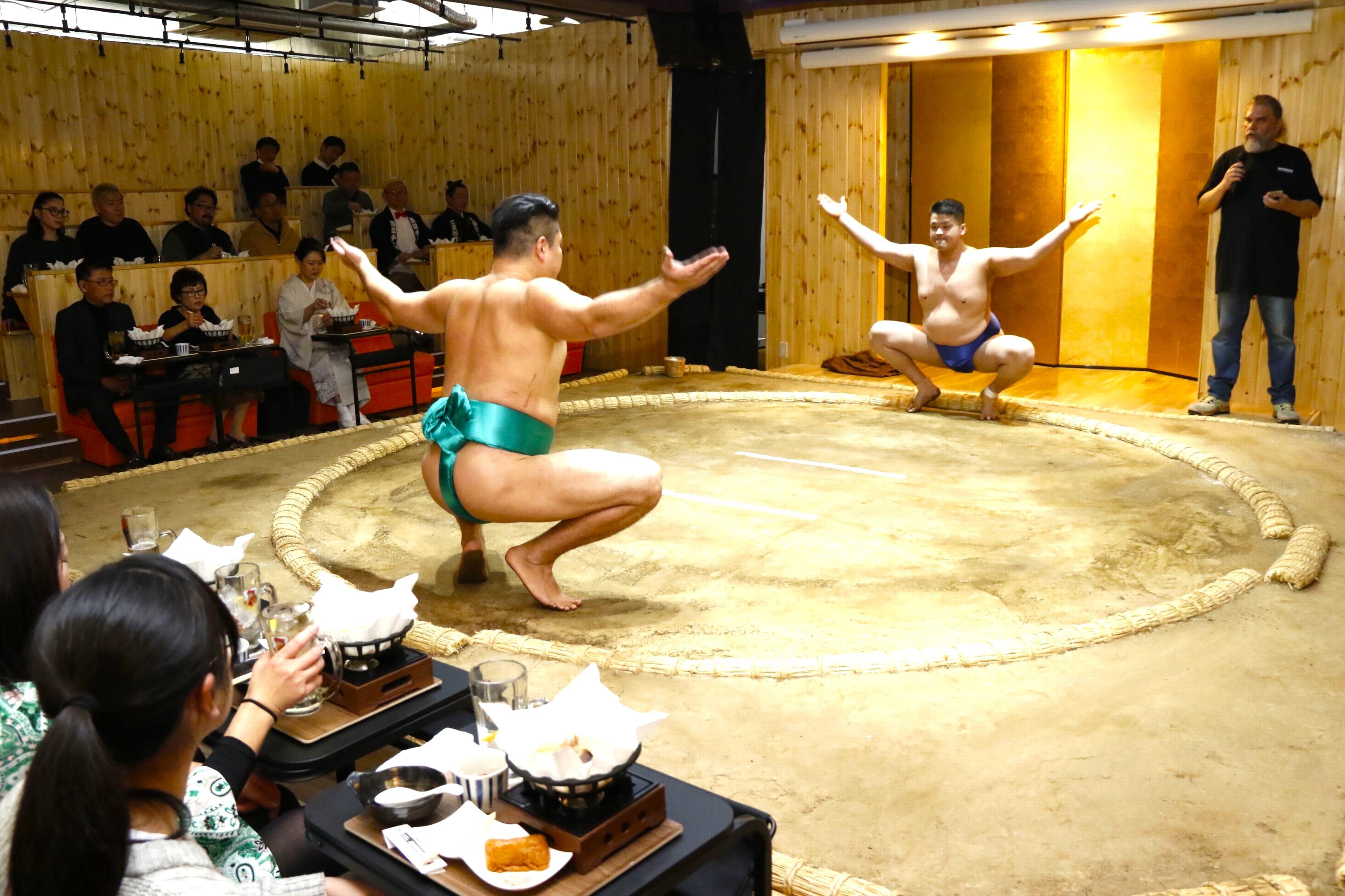
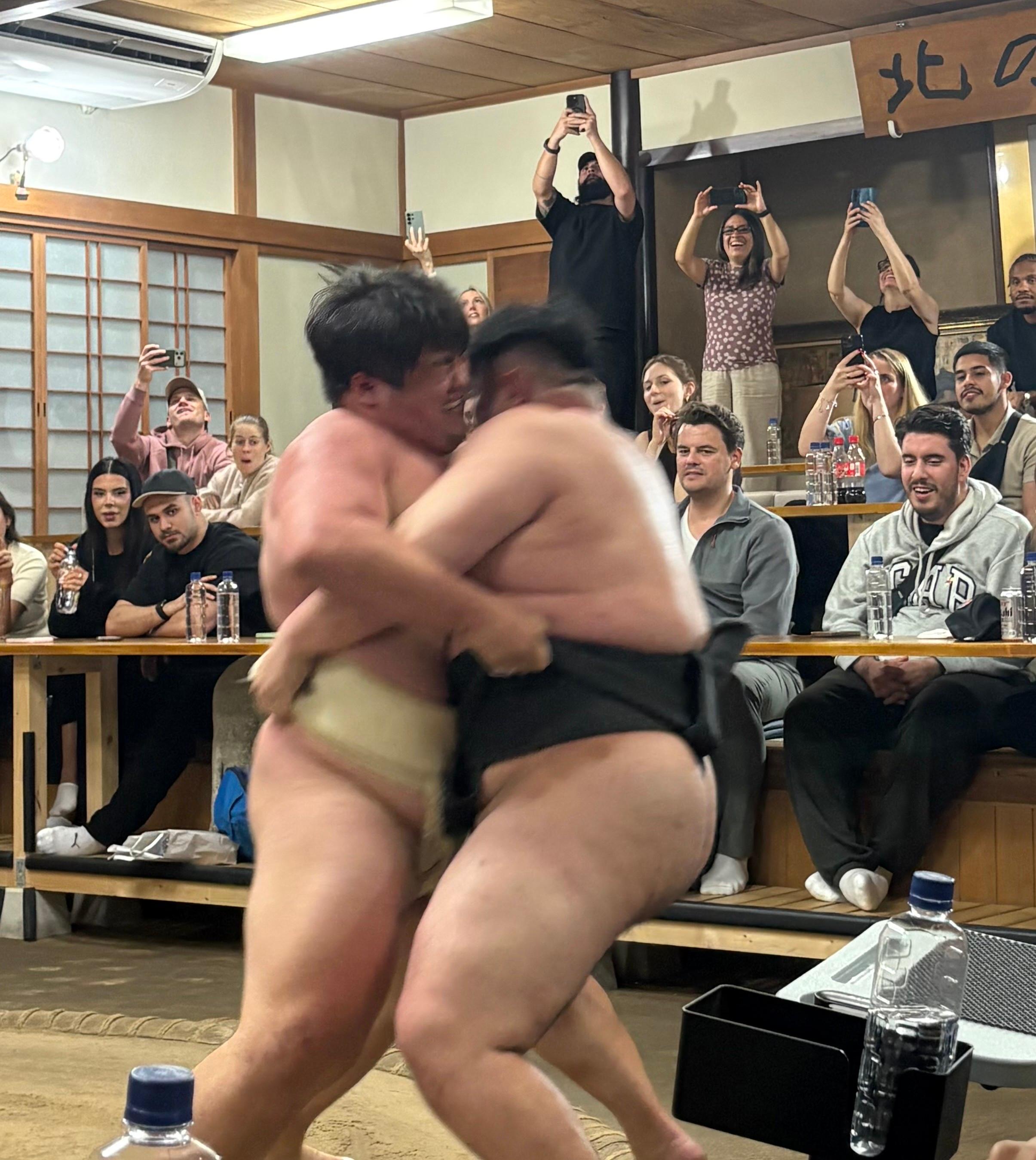
Shinjuku Sumo Wrestling Show & Challenge Experience
- Entry ticket
- Mobile voucher
- Valid same day
- Free cancellation
Sumo Experience Tokyo — Morning Practice at Arashio Stable
Watch rikishi train at dawn, where silence meets thunder
Compare fares, pick the fit — all bookings are mobile-voucher and eligible for free cancellation where shown.
1 hr 15 min
1 hr 15 min
2 hr
| Experience | Duration | Rating | Small group | Free cancel. | Price | |
|---|---|---|---|---|---|---|
|
Standard Entry
Most popular
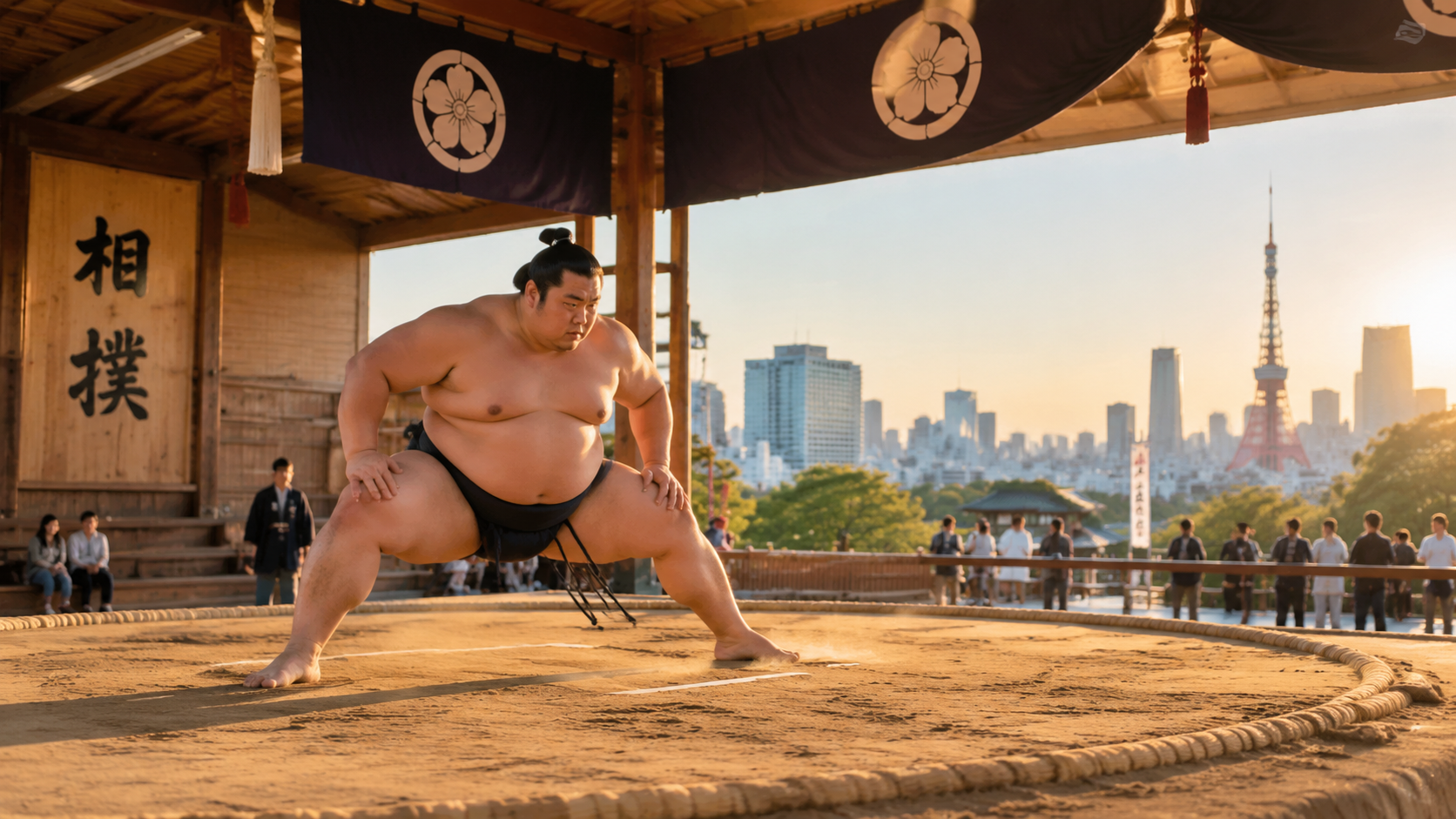
Shinjuku Sumo Wrestling Show & Challenge Experience
|
1 hr 15 min | ★ 4.9 | ✓ | ✓ | €28 | Book → |
|
Standard Entry
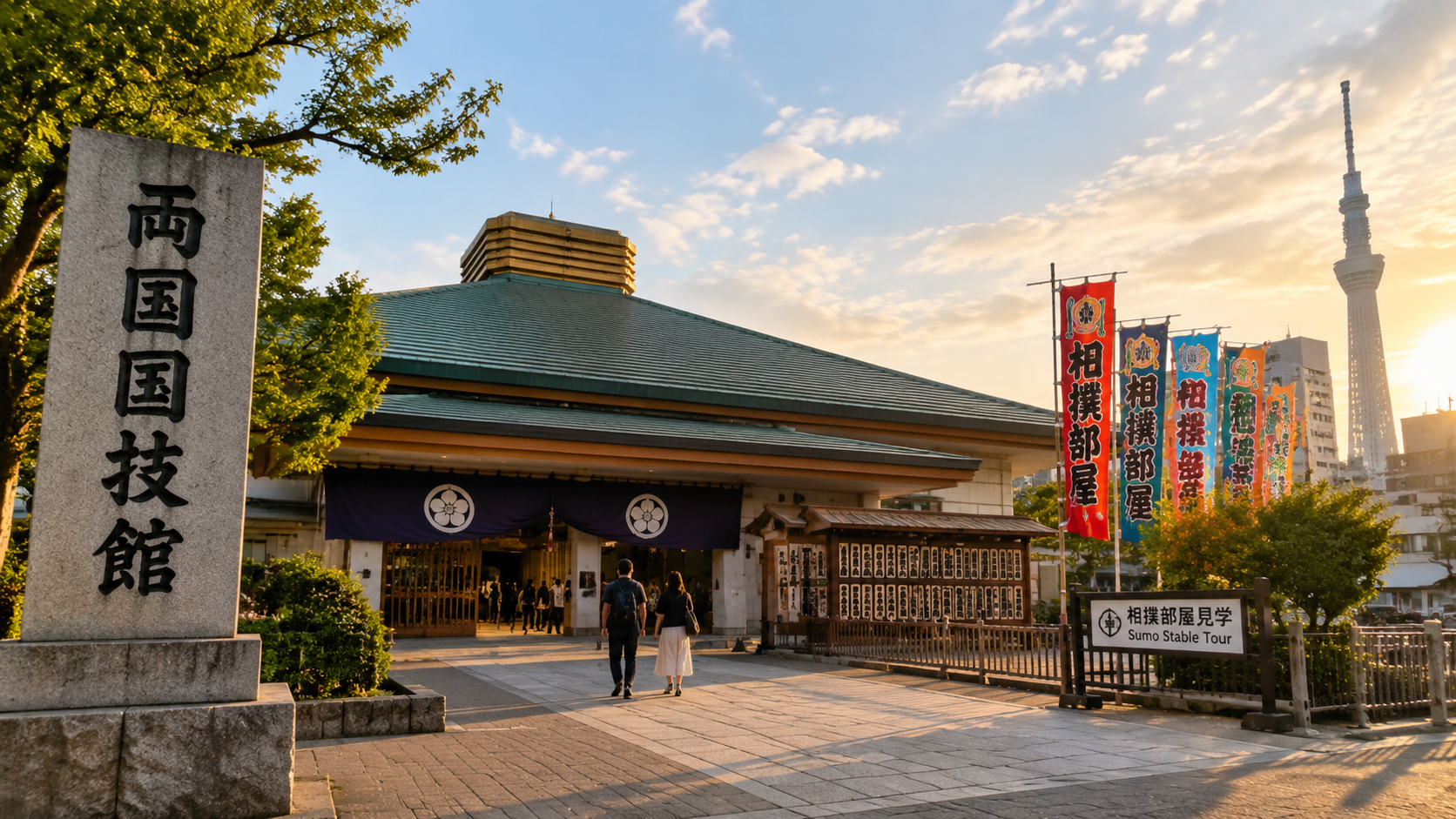
Shibuya Sumo Wrestling Show & Ring Challenge
|
1 hr 15 min | ★ 5.0 | — | ✓ | €46 | Book → |
|
Standard Entry
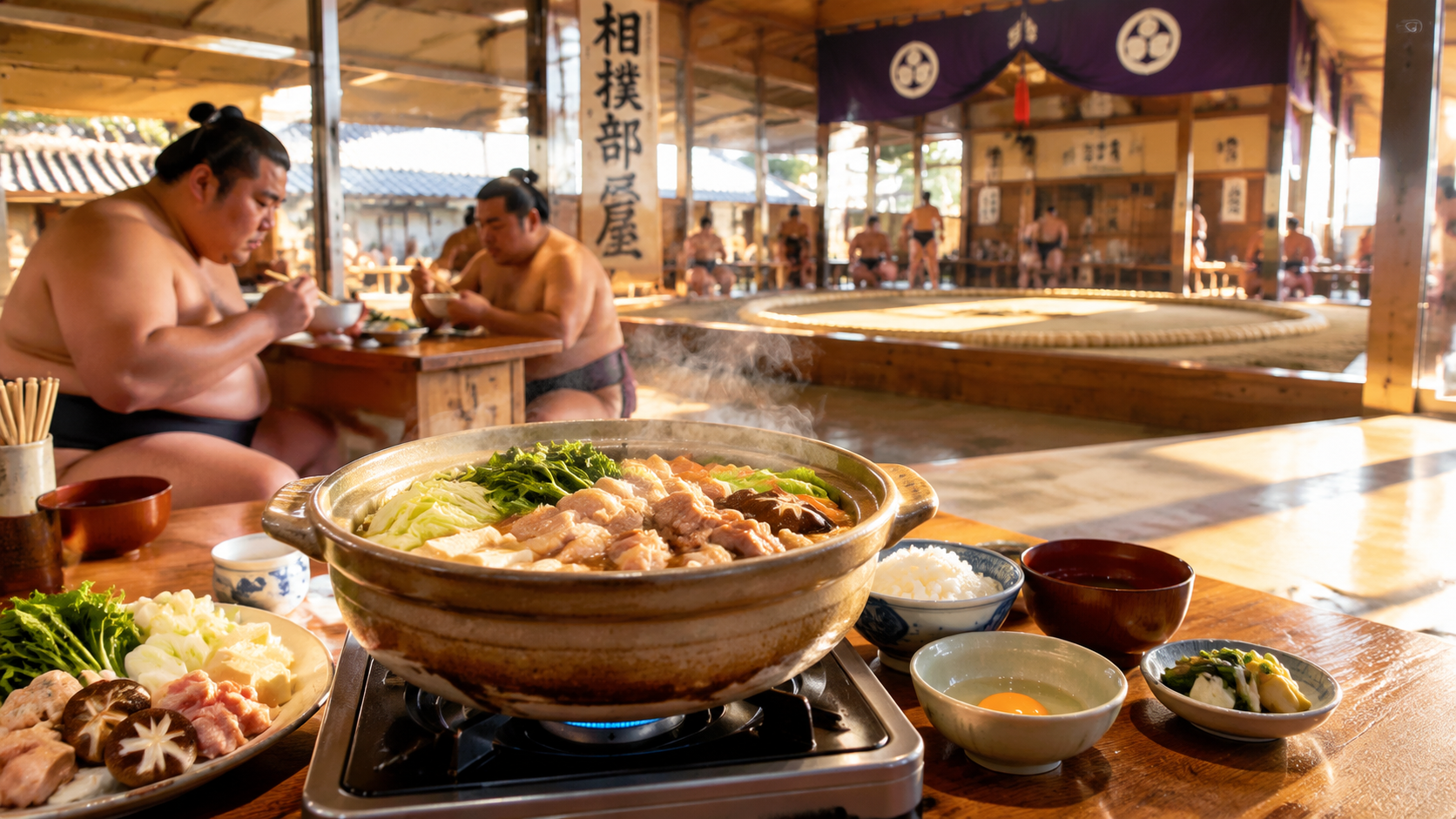
Sumo Wrestling Show with Chanko Hot Pot & Geisha Performance
|
2 hr | ★ 4.8 | — | ✓ | €90 | Book → |
They complement each other; most visitors who do both call the tournament the more thrilling event while the stable visit provides a rare, grounded perspective. Choosing a sumo experience tokyo tour offers quiet observation, whereas the tournament provides a high-energy spectacle.
|
Top pick Arashio Stable Practice |
Grand Sumo Tournament | |
|---|---|---|
| Atmosphere | Raw and silent training | High-energy commercial event |
| Interaction with Wrestlers | None—observe from outside | Limited—mostly distance viewing |
| Cost | 0 JPY | 2,500–20,000 JPY |
| Access Level | Public street window | Requires purchased admission |
| Viewing Distance | Close range through glass | Variable depending on seat tier |
| Scheduling | Consistent morning daily | Specific seasonal tournament dates |
| See tickets & prices |
Verdict: If you prioritize intimate proximity to rikishi training, the sumo experience tokyo remains the superior choice, while those seeking competitive intensity should secure sumo experience tokyo tickets for the professional matches.
Hand-picked experiences loved by thousands of travelers
1 hour 30 minutes
Free Cancellation
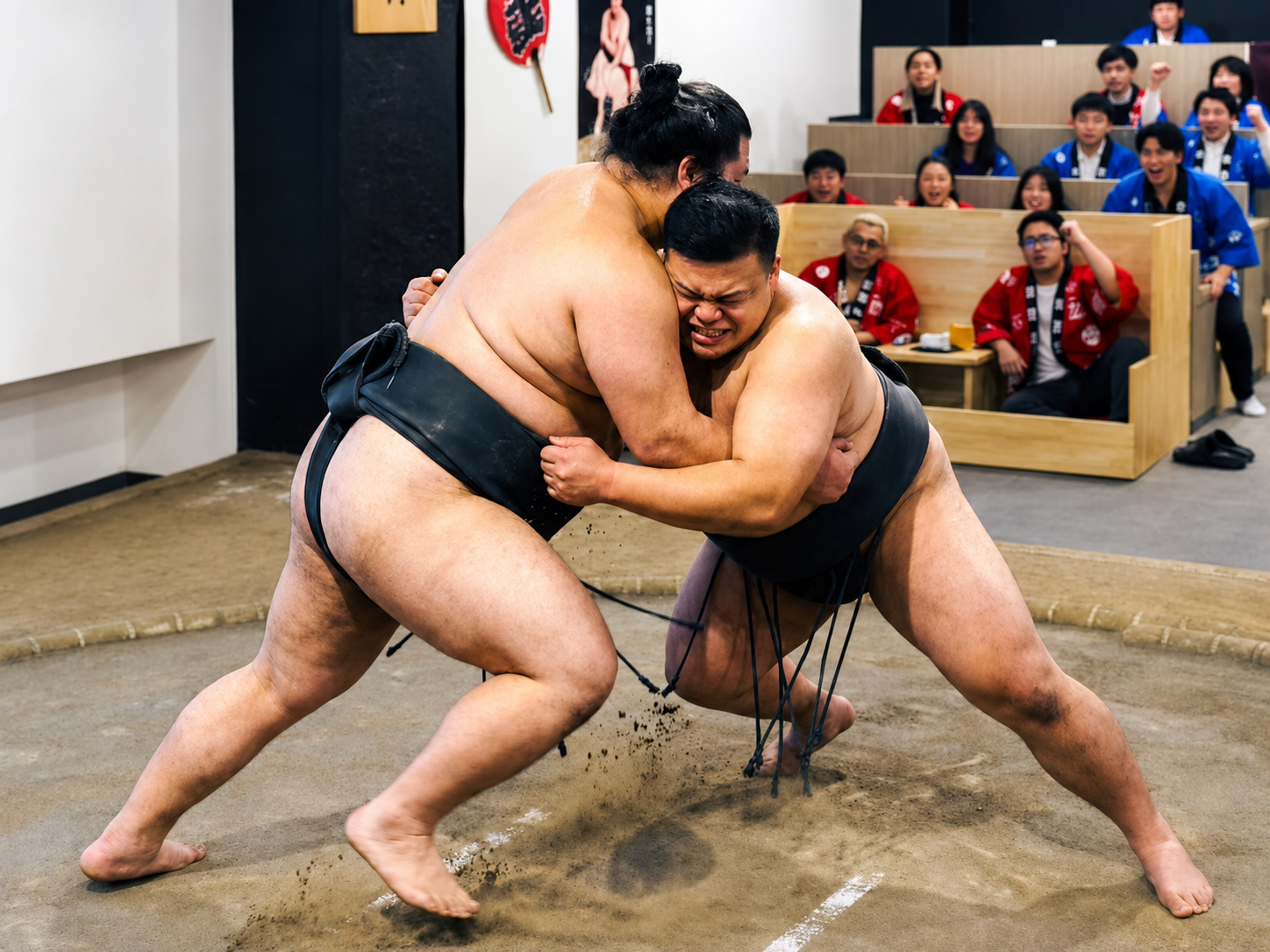
Watch retired professional wrestlers battle up close in an authentic former sumo stable, then taste their traditional training meal.
1 hour 30 minutes
Free Cancellation
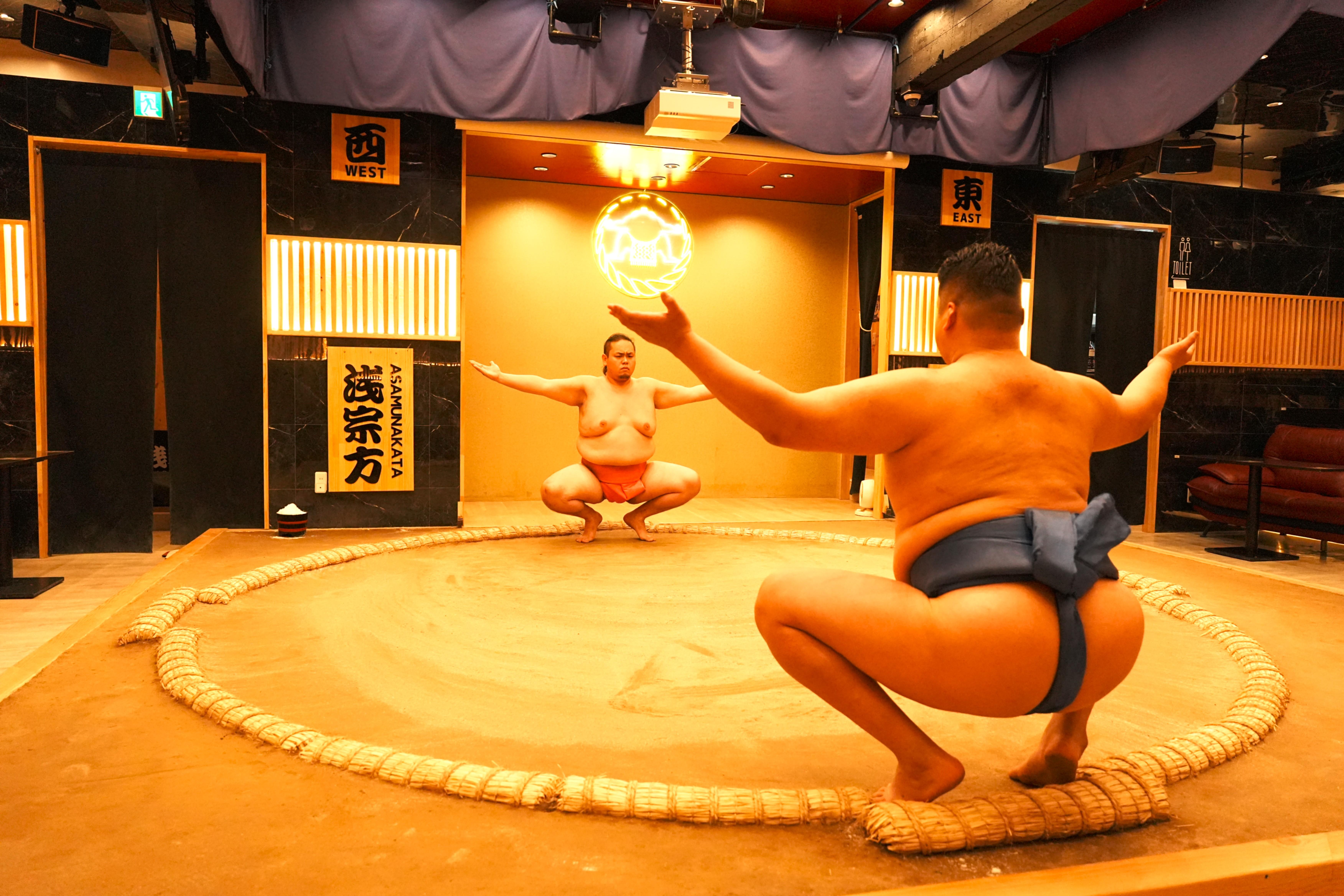
Watch retired professionals perform traditional bouts and rituals in central Tokyo's entertainment district
2 hours
Free Cancellation
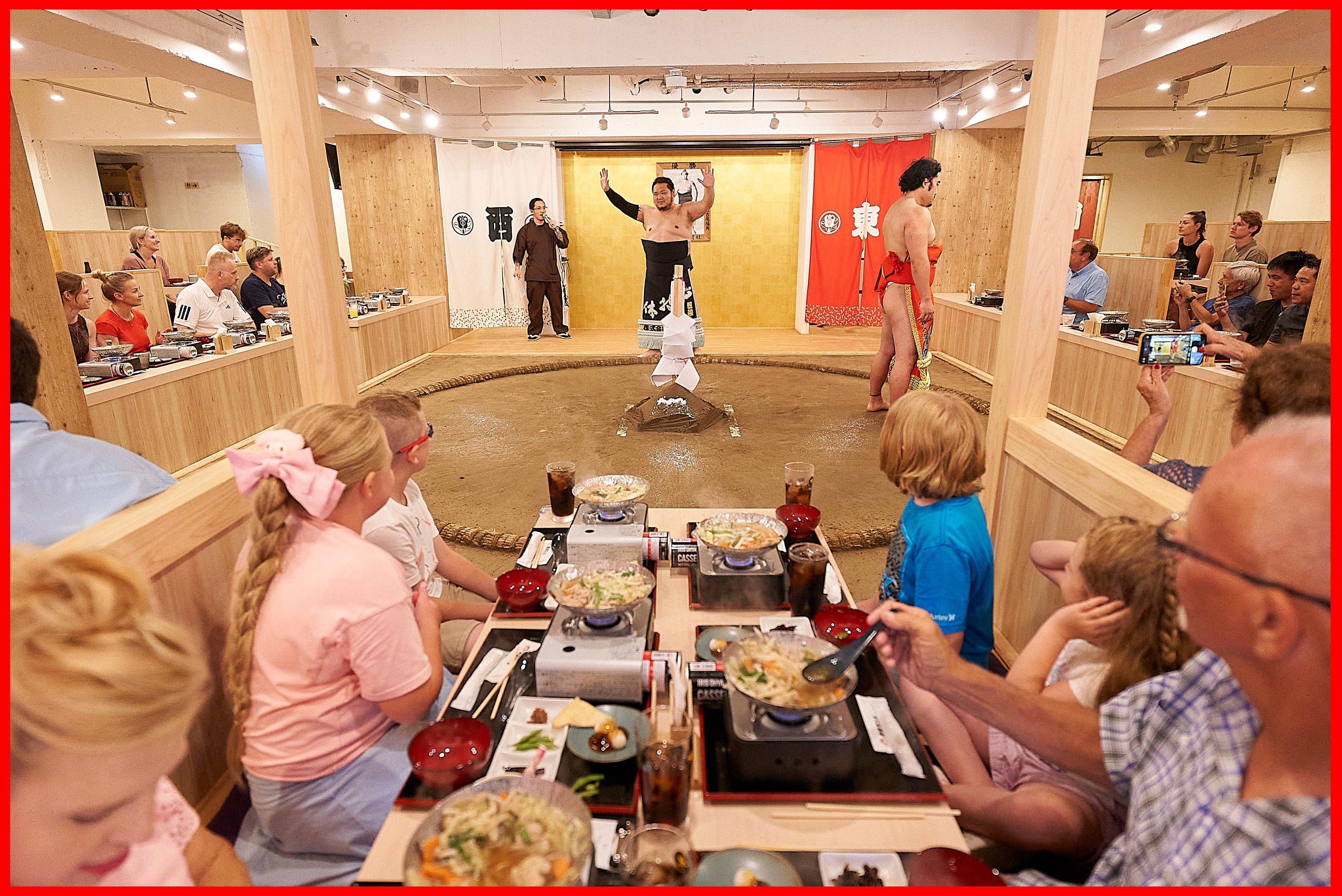
Watch retired sumo wrestlers perform live bouts while dining on wagyu sukiyaki and chanko hot pot
2 hours
Free Cancellation
Get ringside for live sumo action, savor traditional wrestler hot pot, and step onto the dohyo yourself
1 hour 30 minutes
Free Cancellation
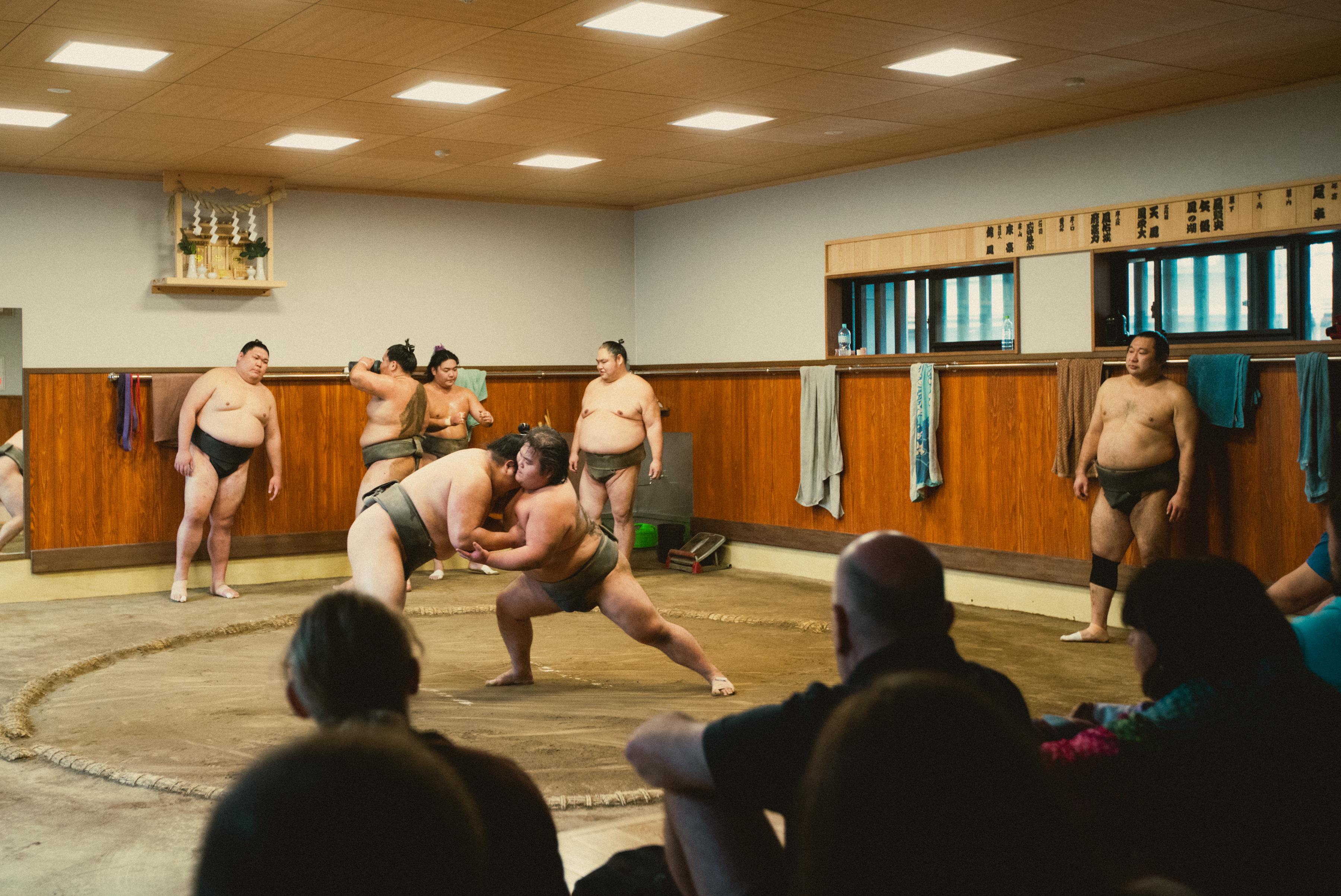
Step inside an authentic sumo training facility and witness wrestlers practicing their ancient craft
2 hours
Free Cancellation
Step inside a working sumo stable to watch wrestlers train and meet them up close in Tokyo's Ryogoku district
2 hours
Free Cancellation
Step inside an authentic sumo stable and watch elite wrestlers train just meters away from you.
3 hours
Free Cancellation
Go behind the scenes at a real sumo stable with exclusive access and expert commentary from a sports journalist
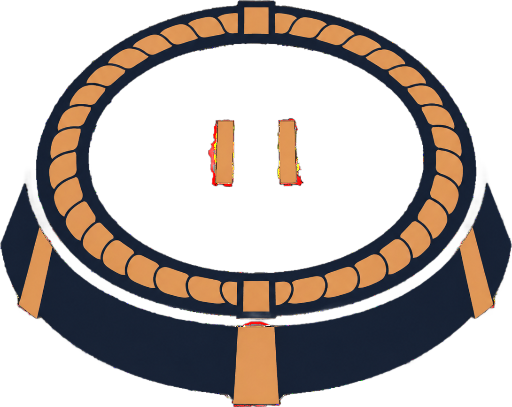
The raised earthen ring where all intense wrestling bouts occur during practice.
Observation of rikishi performing drills and repeated mini-matches.
The traditional silk belt worn by wrestlers during their daily morning training.
Space where wrestlers perform rigorous flexibility exercises like matawari.
The street-facing glass partition that allows the public to view training for free.
You arrive at Arashio Stable just before 07:30, when the morning air still carries the chill of night and the streets of Nihombashi are quiet. The stable's entrance is unmarked except for a wooden sign bearing the kanji for Arashio.
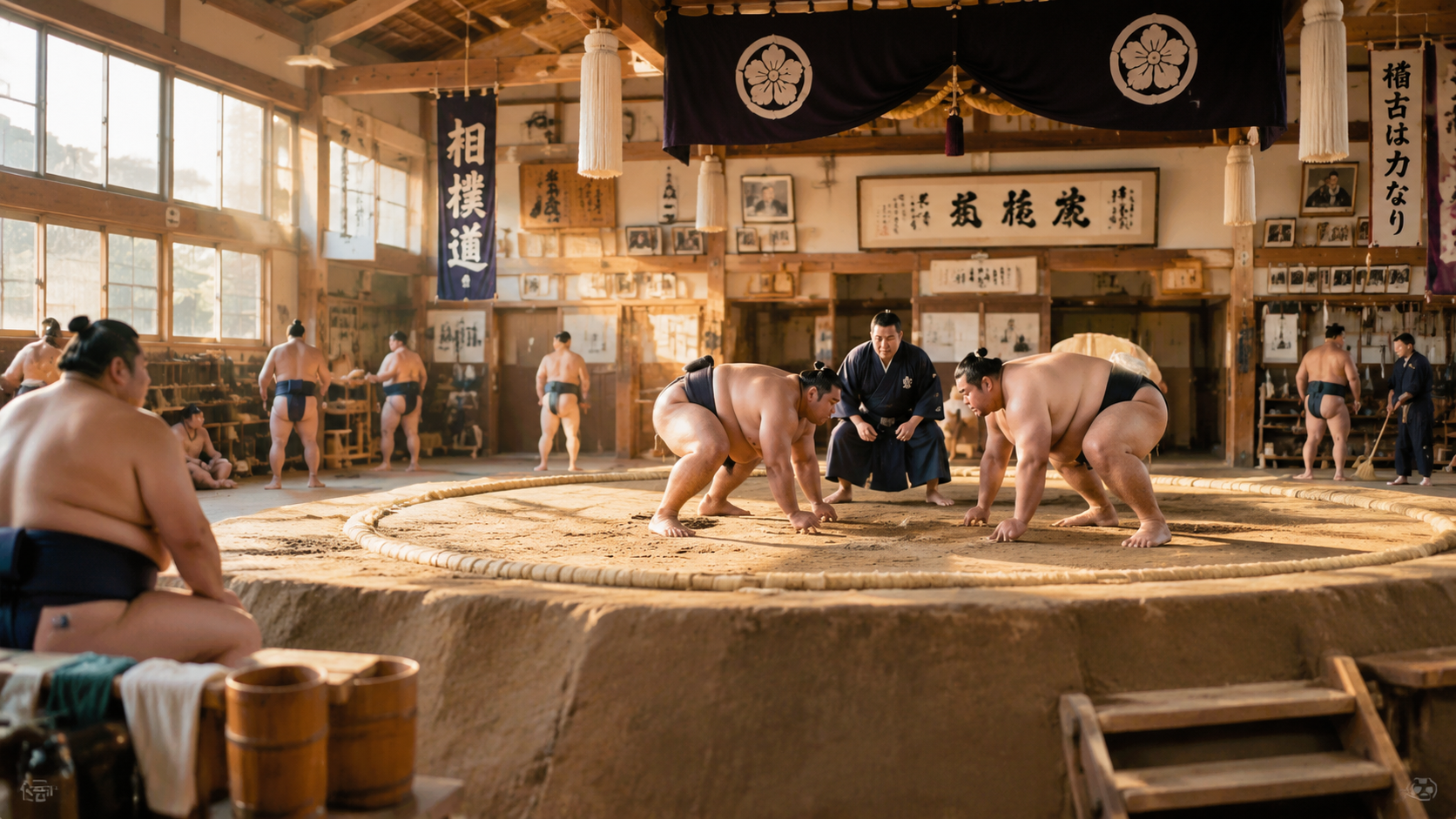
You remove your shoes in the genkan and step into a narrow corridor that smells of incense and clay. An attendant gestures toward the keikoba, a low-ceilinged hall where the dohyō rises from the floor like an island, its surface raked smooth and glistening under fluorescent lights.
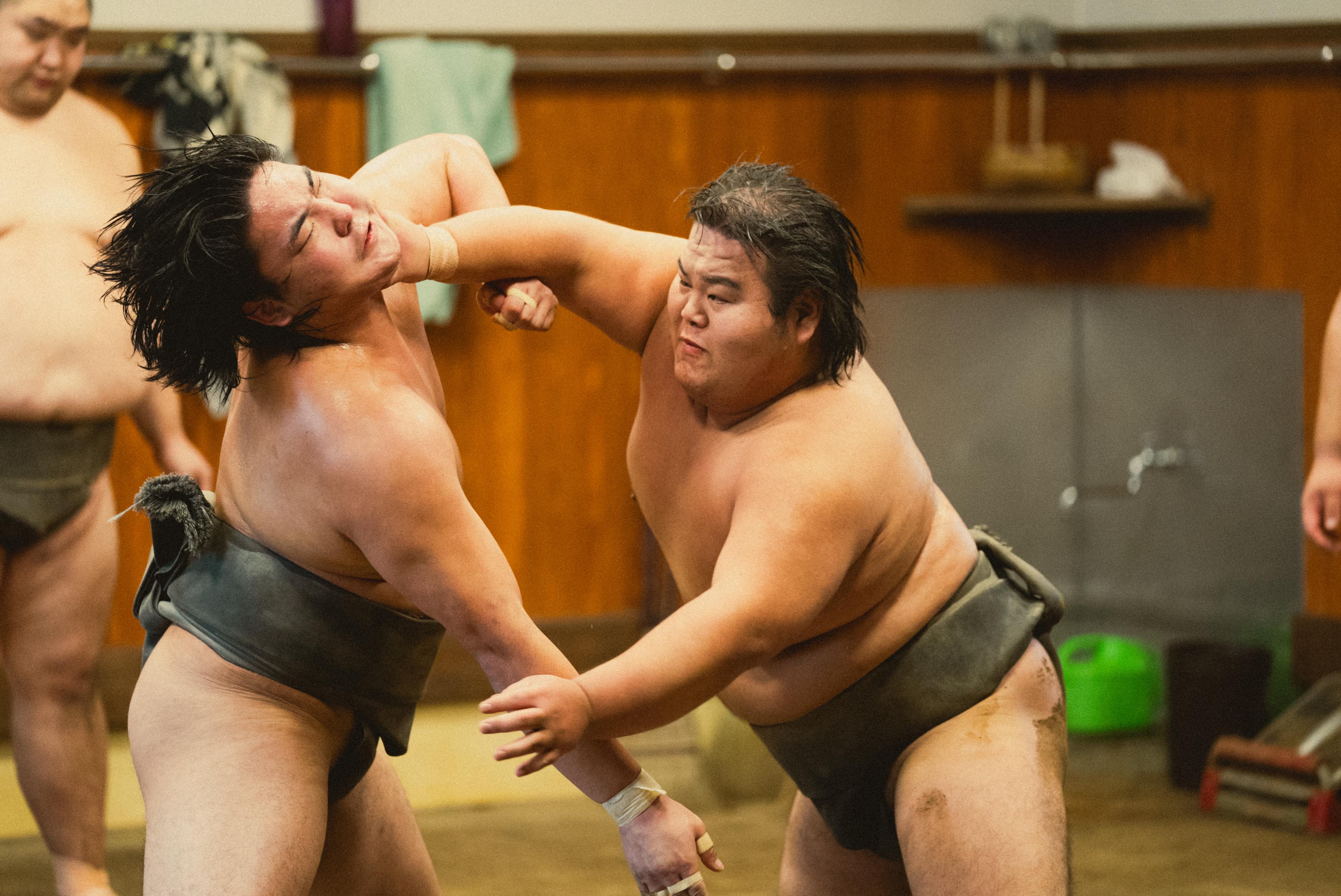
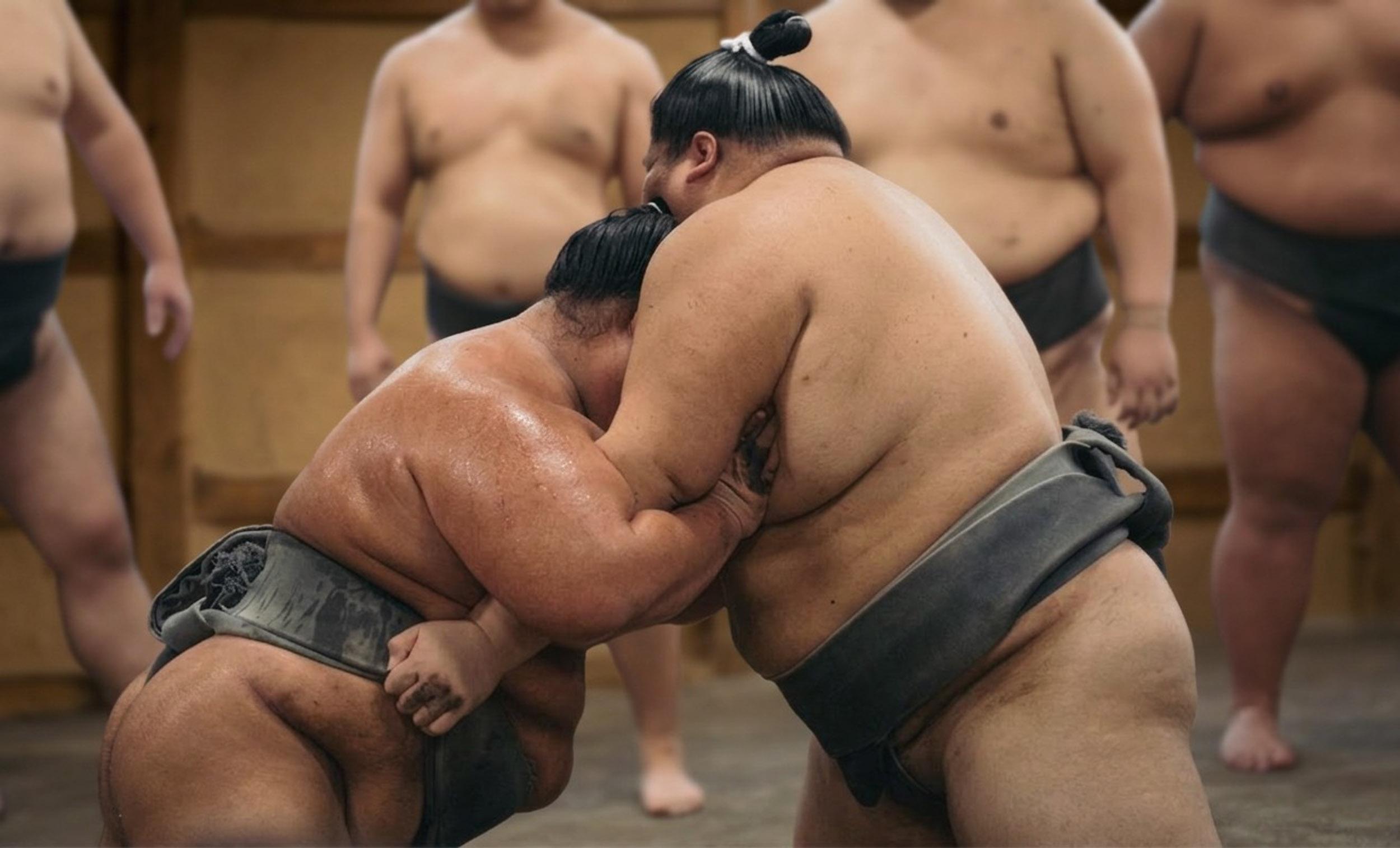
You take a seat on a folding chair at the back of the room. The first wrestlers are already grappling, their bodies colliding with a sound like thunder contained in a small room. Sweat flies from their shoulders. Between bouts, they crouch at the edge of the ring, chests heaving, waiting for the oyakata's nod. The senior rikishi enter without ceremony, their topknots oiled and perfect, their mawashi belts knotted tight. They move with the economy of men who have performed these rituals ten thousand times. You watch a veteran wrestler guide a junior through a throwing technique, his hands adjusting the younger man's grip with surgical precision.
By 09:00, the intensity begins to ease. The wrestlers bow to the oyakata and file out toward the baths. You leave through the same quiet corridor, stepping back into a city that has now fully woken, carrying the memory of bodies in motion and the smell of clay on your clothes.
All the details about your upcoming adventure in one place
Step into a working sumo stable to watch rikishi train during their morning practice session. This sumo experience Tokyo brings you face-to-face with the rituals, techniques, and discipline of Japan's national sport, from warm-up stretches to powerful clashes in the dohyo ring. Sumo experience Tokyo tours include a Q&A with former wrestlers and insight into stable life, ranking systems, and the path from novice to sekitori.
Arashio Stable opens its training hall to the public each morning at 07:30, a rare privilege in a world where sumo stables traditionally operate behind closed doors.
The practice of allowing spectators into the keikoba—the sacred training ring—began in the early 2000s when a handful of stables in Tokyo's Ryogoku and Nihombashi districts recognized the educational value of transparency. Arashio, founded in 1961 by former yokozuna Arashio Kintarō, has maintained this open-door policy longer than most, welcoming visitors to witness the rigorous morning routines that have remained unchanged for centuries. The stable's location at 2-47-2 Nihombashihamacho places it within walking distance of Suitengumae Station, far enough from the tourist circuits of Asakusa and Shinjuku to preserve its working atmosphere.
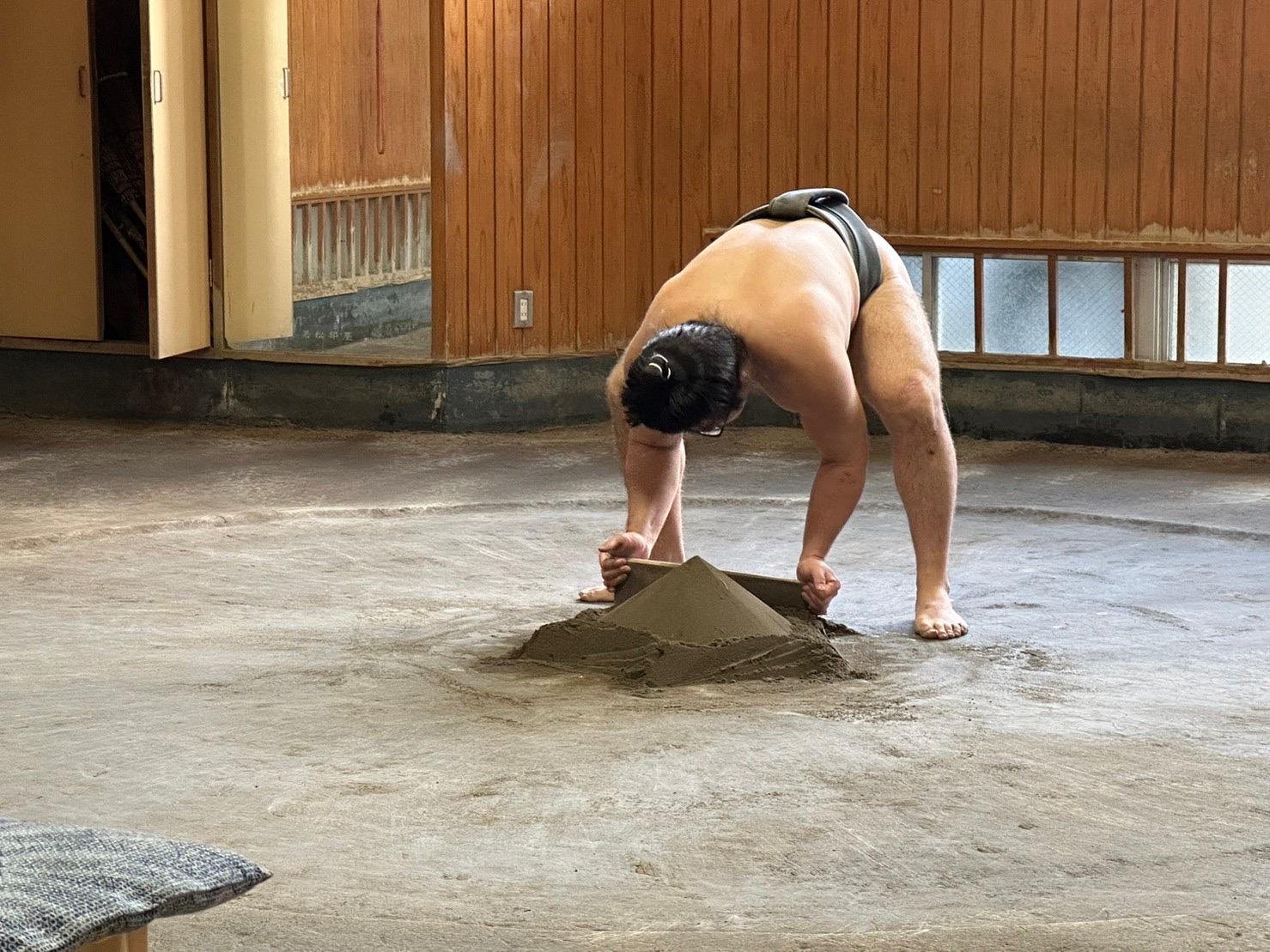
Sumo training follows a strict hierarchy. Junior wrestlers arrive before dawn to sweep the clay diorama, heat the chanko pots, and prepare the ring. By the time senior rikishi enter at 07:30, the keikoba is already warm with anticipation. Practice sessions unfold in ascending rank order: the newest recruits grapple first, their bodies still lean and unformed, while sekitori—the salaried elite—sit cross-legged along the perimeter, observing in silence. The oyakata, or stablemaster, watches from a raised platform, occasionally barking corrections or offering quiet praise. Visitors sit on folding chairs at the rear of the hall, close enough to hear the slap of palms on thighs, the controlled breathing before a charge, and the thud of bodies meeting clay. No rope separates audience from athlete; the only barrier is respect.
The sumo experience tokyo tour circuit has grown in recent years, with operators offering packages that include chanko lunch and photo opportunities. Arashio Stable remains one of the few venues that requires no entrance fee, though reservations through their official site—arashio.net—are essential, as the hall accommodates fewer than twenty spectators at a time. The stable's wrestlers compete in all six annual honbasho tournaments, and their training intensity peaks in the weeks before each basho. Morning practice ends by 09:30, when the wrestlers retreat to the communal bath and then to breakfast. The keikoba empties quickly, the clay smoothed and ready for the next dawn.
Sumo experience tokyo reviews consistently note the intimacy of stable visits compared to tournament attendance at Ryogoku Kokugikan, where spectators sit in tiered seating far from the action. At Arashio, you observe the mechanics of the sport: the way a wrestler plants his foot to anchor a throw, the split-second timing of a sidestep, the quiet conference between oyakata and rikishi after a decisive loss. The stable's wrestlers range from teenage recruits to veteran maegashira, each at a different stage in the long climb toward sumo's upper ranks. The experience offers no commentary, no English signage, and no performance for tourists—only the daily work of men preparing for combat.
No rope separates audience from athlete; the only barrier is respect.
Dress modestly as this is a traditional Japanese cultural site. Avoid eccentric or revealing clothing that may distract the wrestlers during their intense morning keiko training.
There is no storage for luggage at the facility. Please travel light as you will be observing from the public sidewalk.
Non-flash photography is generally permitted, but respect the athletes by not using flash or bright lights. Always prioritize quiet observation over capturing media.
Children are welcome but must remain strictly silent and still. Parents should be prepared to leave immediately if children become restless or loud.
Viewing occurs from the public street sidewalk, which is flat and accessible. There is no entry into the building itself.
Eating and drinking are strictly prohibited at the observation area. Please refrain from chewing gum or bringing snacks to the stable frontage.
Opening Hours
07:30–09:30
Address
2-47-2 Nihombashihamacho, Chuo-ku, Tokyo 103-0007, Japan
Accessibility
Street-level sidewalk viewing only
Best Arrival
07:30–09:00
Storage
Not available at the stable
Navigation
1-minute walk from Hamacho Station Exit A2
Arashio Stable offers free entry for observing morning practice; no tickets or reservations are required for the street-view window. Please note that the stable management reserves the right to restrict viewing at any time without notice.
Recommended time
45-90 minutes
To enjoy a sumo experience tokyo session, you should plan to arrive within the recommended window to observe the rikishi performing their rigorous morning training. Watching these athletes engage in their daily dohyo drills provides a genuine look at stable life, though spaces fill rapidly, making early arrival essential for a clear view. While you do not need to secure sumo experience tokyo tickets, expect to stand quietly behind the glass for roughly an hour as the keiko practice concludes. Those interested in sumo experience tokyo tours should prioritize a 07:30 start to catch the full intensity of the wrestling session before the stable closes for the day.
Crowd levels through the day
Arashio Stable was founded in 1961 by former sekiwake Arashio Kintarō, who competed under the Hanakago stable before establishing his own training house in Tokyo's Chuo ward. The stable quickly earned respect for producing disciplined wrestlers who emphasized traditional techniques over size alone. By the 1970s, Arashio had cultivated several makuuchi-division competitors, solidifying its reputation within the Japan Sumo Association. The stable's location in Nihombashi, a historic merchant district, reflected its founder's belief that sumo belonged not only in tournament halls but in the everyday fabric of urban life. In the late 1990s, the stable adopted an open-door policy that would distinguish it from most training houses across Japan. While morning practice sessions had always been semi-public events at certain heya, Arashio formalized the arrangement, welcoming foreign visitors and Tokyo residents alike to observe keiko without advance reservation. This decision coincided with growing international interest in sumo and positioned the stable as a cultural ambassador. The sumo experience Tokyo offers today stems directly from that policy shift, which balanced transparency with the discipline required of rikishi in training. The stable relocated to its current Nihombashihamacho address in 2003, occupying a purpose-built facility designed to accommodate both wrestlers and observers. Morning practice sessions became a fixture for tourists seeking an authentic sumo experience Tokyo tours rarely included before the 2000s. Arashio's wrestlers train under the supervision of the current stablemaster, who inherited leadership in 2009 and maintained the public-access tradition. The stable has produced multiple sekitori and continues to field competitors in professional tournaments. Its role as a working training facility that welcomes the public remains unusual within the sumo world, where most stables restrict access to invited guests or credentialed observers.
Arashio Stable founded by former sekiwake Arashio Kintarō in Tokyo's Chuo ward.
Stable produces multiple makuuchi-division wrestlers, earning recognition within the Japan Sumo Association.
Open-door policy formalized, allowing public observation of morning practice without reservation.
Stable relocates to Nihombashihamacho, occupying a facility designed for both training and public access.
Current stablemaster assumes leadership, continuing the tradition of welcoming international visitors.
Arashio remains one of few stables offering unrestricted public access to morning keiko sessions.
The Nihombashihamacho neighborhood offers several quiet cafes and traditional eateries perfect for breakfast near your sumo experience tokyo. While the stable itself does not serve food, these nearby spots allow you to reflect on the morning training session over a warm meal.
This neighborhood eatery serves hearty breakfast sets and set menus that are popular with locals. It is a reliable choice if you need a substantial meal after watching the rikishi during sumo experience tokyo tours.
Real experiences from real travelers
Witnessing the sumo experience tokyo at a working stable was humbling. The rikishi train with incredible discipline at 6 AM, and the chanko-nabe breakfast afterward gave real insight into their daily lives. Respectful silence is expected during practice.
The stable master explained each training ritual in detail. Watching the wrestlers practice their shiko stomps on the clay dohyo was mesmerizing. The cultural depth here goes far beyond what you see on television.
This sumo experience tokyo tour connects you to centuries of tradition. The stable smelled of clay and sweat, and the athletes' focus was absolute. Sharing chanko-nabe with the wrestlers made the morning unforgettable.
Our guide ensured we followed all etiquette rules. The training session lasted about 90 minutes, and photography was limited to preserve the athletes' focus. A rare window into a closed world.
The sheer physicality of sumo training is something you must see in person. The stable's wooden beams and rice-straw bales set the scene perfectly. Breakfast was hearty and delicious.
Attending a sumo stable practice in Tokyo revealed the sport's spiritual dimension. The wrestlers' pre-bout rituals and the stable master's teachings added layers of meaning. Small group size kept it intimate.
The sumo experience tokyo tours offer something truly rare. We sat on tatami mats just meters from the dohyo, feeling every stomp. The chanko-nabe meal was a generous conclusion.
Our group of eight was welcomed warmly. The stable's morning routine begins before sunrise, and the discipline on display commands respect. A must for anyone serious about Japanese culture.
The clay dohyo ring, the sound of bodies colliding, the smell of the stable—every sense engaged. The wrestlers' dedication to their craft was evident in every movement. Chanko-nabe was rich and nourishing.
This sumo experience tokyo gave me a new appreciation for the sport. The stable master's stories about training young rikishi added context. Morning light through the shoji screens created a timeless atmosphere.
Everything you need to know for your journey
No, entry to observe morning practice at Arashio Stable is 0 JPY and does not require tickets.
The stable is open daily from 07:30–09:30, though sessions are subject to change.
No, Arashio Stable does not permit public entry; all observations must take place from the street-facing window.
The best arrival window is 07:30–09:00 to ensure you catch the practice session.
Yes, you must maintain complete silence, avoid eating or drinking, and stay in one place during your sumo experience tokyo.
The stable is located at 2-47-2 Nihombashihamacho, Chuo-ku, which is a 1-minute walk from Hamacho Station.
Non-flash photography is allowed, but ensure your sumo experience tokyo remains respectful.
You can visit the nearby Sumo Museum or explore the Ryogoku district if training is not available.
Yes, children may attend but must remain perfectly quiet throughout the entire sumo experience tokyo session.
Join thousands of happy travelers who have discovered this incredible experience
Book Your Experience Now